Mike's Brake & Alignment Shop

Honest & Quality Service

Tag: Brakes (page 2 of 2)

What is ASE Certification & Why is it Important?

Is your car making strange sounds on your morning commute? Have you been looking for a reliable mechanic to trust your normal maintenance schedule with? One way you can know your car is being well cared for is if the mechanic is ASE certified. Keep reading to discover what it is and why ASE certification is important for your vehicle care.

*Note: If you’ve found an ASE certified mechanic you can trust, give our other article a read to learn how to properly work with your mechanic for a flawless maintenance trip every time.
Mechanic and customer giving a thumbs up.

What is ASE Certification?

When it comes to choosing your mechanic, finding one with that little blue and white sticker can be highly reassuring for consumers. Standing for “Automotive Service Excellence,” this certification process is designed to test and certify automotive professionals. The certification process began in 1972 and is used as the standard of excellence for every mechanic in the nation. It’s also useful to note that clients can ask which mechanics in a specific shop are ASE certified and request only their services.

Why is it Important?

With the need to properly maintain and care for your vehicle, finding an ASE certified mechanic or shop provides peace of mind in caring for your vehicle. For auto repair shops it’s highly beneficial because they know they’ve hired knowledgeable and professional mechanics to serve their clientele. Consumers will also rest easy knowing their vehicles are being cared for by a professional mechanic with the necessary training to keep their cars running the way they should.

How it Works

As a measuring tool for consumers, it’s important to understand just how the certification process works for your own knowledge. There are two types of ASE certifications with specific requirements and criteria’s for each. ASE certification requires mechanics to have at minimum two years of automotive experience and should be able to finish and pass at least one of the specialty exams.

Mechanic smiling while working on a vehicle.

For an ASE Master Certification, mechanics who’ve taken and passed the ASE exams on various subjects may choose to go for their master certification. For each specific area there are multiple tests which the automotive professional must pass in order to obtain their certification. It’s also a requirement for all ASE certified professionals to renew their certificate every five years in order to maintain their knowledge.

Thoughts With so many automotive shops and professionals to choose from for your vehicle care needs, the search can be narrowed down by looking for that ASE certified sticker. From understanding what ASE certification is to why it’s important, you’ll be able to trust your car is being well cared for. If you’re still searching for your personal mechanic, bring your vehicle into Mike’s Brake & Alignment Shop where our ASE certified mechanics will be able to properly maintain and care for your car. Contact us today!

Most Common Hazards While Driving in the Snow

While it is always important to be confident in your driving skills, especially through difficult weather, it is important to understand the dangers that can come with it. With the world throwing any type of rain or shine at us however it sees fit, there is nothing more vital than knowing how to handle the changing seasons when driving on the road. There is no better example of a weather hazard than those that come up when it snows. Read further to learn about the most common hazards that can arise when it snows and how to avoid them.

Dying Battery From the Cold:

A more indirect effect of snow, the extreme cold and insulation created by your hood can result in the draining of your battery. Cold naturally drains the energy out of any battery over time and considering how important they are for a car to run properly, it is important to keep this in mind and take steps to prevent it. The easiest ways to prevent your battery from losing its charge are to get the battery checked before the cold season comes to ensure it is not already low and trying to keep your car parked in some kind of enclosure or garage at all times when it’s not running. Another helpful tip is to give your car some time to warm up after you turn it on before using any accessories; using the radio or heater as soon as the engine is on may not give the battery enough time to recharge from the drain the cold has called, meaning it could stall.

No Traction on Wheels:

It seems like an obvious bit of advice, but it needs to be said again because of how important it truly is to ensure you keep control of your car while you drive. Snow causes an incredible amount of difficulty for your tires to gain traction on the road, which means that as soon as you relax on the wheel for even a minute, you could end up losing control if even the slightest change of terrain occurs. The most dangerous and common concern when it comes to snow is actually not even the snow itself, it’s the ice it may be covering that you wouldn’t notice. Hidden ice on the road is often referred to as “black ice” due to its extremely dangerous nature and the inability you would have to control your car if you drive over it too fast. Ways of counteracting this lack of traction is to constantly keep both hands firmly on the wheel, don’t take turns too sharply and never drive your car too fast when there are snowy or icy conditions.

Poor Visibility:

There is one constant when it comes to driving a car, if you can’t see where you are going, you can’t drive. One of the largest obstacles a person faces in any kind of bad weather is the issues that arise with visibility. Rain and snow can cause serious issues when it comes to seeing the road in front of you, which means you always need to have an increased sense of vigilance as well as taking steps to lessen the effects. Keeping your heater on the windshield setting while you drive helps to keep new ice from forming or snow from sticking on the windshield while still keeping you warm. Keeping a scraper in your car is also very important to help get the ice buildup off of your windows before you even drive it, because with the air being so cold, it would take way too long for it to melt on its own when you drive. Only use your windshield wipers if there is true snowfall, because the friction of the wipers on the windshield with the cold of the outside air could also cause the window to fog up slightly, further reducing visibility.

Conclusion:

There are plenty of different ways in which you can prevent yourself from danger while driving in the snow, but the most important thing is that you always employ these tips and never get comfortable. The ice and snow are constant hazards which require constant vigilance, so always take them seriously. When it comes to preparing yourself with the best tires and alignment for that upcoming cold season, there is no place better to go than Mike’s Brake & Alignment Shop, so come on in and let’s tackle this winter together.

Brake Components Explained

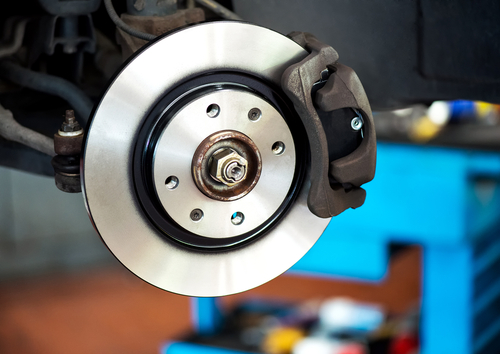
When cruising down the road, it’s imperative to have a properly functioning braking system. Without it, you could be in terrible danger. The braking system in a vehicle is composed of many interconnected parts and if just one of these parts is out of commission, the whole system falls apart. Below, we’ve put together a little information on just how the brake rotors, pads, and calipers function.

Rotors

Rotors connect to your tire's axle. So, what are rotors exactly? These are the large discs that connect to your tire’s axle and are in charge of bringing your car to a slow or a stop. They do this by utilizing the brake pads and calipers to maneuver your braking system. In fact, the rotors are arguably the most important part of your entire braking system! Fortunately, they are also traditionally made from iron and will last for a long period of time.

Pads

Your brake pads are the part of your braking system that will need to be replaced most often. They are the components that squeeze the rotors, allowing Brake pads need replacing more often. your vehicle to come to a complete stop. Unlike rotors, pads are made from a variety of materials such as metallic and ceramic. Though they are originally 10mm thick upon purchase, their thickness wears down over time, hence the need for replacement. Experts recommend replacing your pads every 30,000-70,000 miles.

Calipers

Calipers attach to your rotors. Lastly, the calipers are a component of your system that attaches to the rotors. These work together with the brake pads to slow down your vehicle and bring it to a halt. It is the calipers that squeeze the pads allowing the rotors to stop your car. Like rotors, calipers usually last a long while but there may be times when they will need replacing.

Conclusion

There you have it; rotors, pads, and calipers all work in concert to decelerate your vehicle and keep you safe. If you notice squeaking, grinding, or other unpleasant noises or sensations coming from your braking system, then having it checked by a professional is key! If your system is compromised, so is your safety. Do you have more insight into the world of braking systems? We’d love to read about it in a comment below!

Newer posts