Mike's Brake & Alignment Shop

Honest & Quality Service

Tag: auto shop (page 3 of 4)

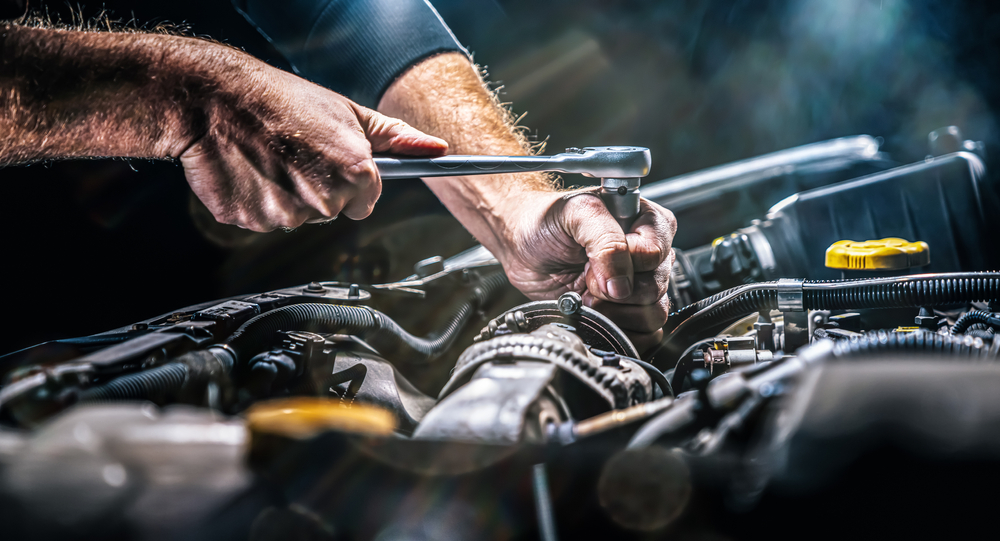
Avoid Going DIY on These Car Repair Projects!

We get it – car repairs are tough and unpredictable, and some auto repairs are a bit expensive to afford. However, cars are huge piece of machinery that involves many moving parts and performing operations, and if you have no experience in fixing the issue, you’ll end up kick starting an entire new chain of malfunctions. In this blog, we will explore some car repair projects that require professionals to handle and should not be attempted at home.

Transmission Repairs

Keep in mind that a broken transmission requires a highly specialized repair job. A car’s transmission is engineered with lots of complex parts, and it requires a set of sophisticated tools and skills to carry out the project successfully. Even if you know a thing or two about a transmission, it’s best to let a professional mechanic handle any repairs.

Related: Learn more about the most common transmission repairs here.

Mounting or Balancing Tires

Changing your car tires might look relatively easy to do. Indeed, you can handle this task yourself. However, remember that balancing your tires or mounting new ones is something completely different. A professional mechanic knows when your wheel needs a balancing, an alignment, or a replacement.

Related: Learn more about how to know if you need your wheels aligned or balanced here

Brake Repairs

Your car brake system tends to be more complicated than you might think. Attempting to repair your brakes on your own could lead to a costly mistake or even an accident. It’s always best to have your brake system inspected and repaired by a professional mechanic.

Fixing the Suspension System

The suspension system in your vehicle is responsible for ensuring a smooth and stable ride. It’s also essential for safety. If you are feeling strong vibrations on the steering wheel or hard jerks whenever your car hits the uneven ground, it may be necessary to get it repaired. Suspension repair requires a certain skillset and knowledge, which is why we don’t recommend DIY repairs.  

Skip DIY and let Mike’s Brake & Alignment Shop handle your automotive repair needs!

If you live in Fort Worth, TX, and you’re unsure of how to repair a particular car issue, don’t hesitate to bring it to our shop. With many years of experience, our clients can attest to the shop’s professionalism, repair turnaround time, and customer service. Call us today at 817-834-2725 or visit our website for more information.

How to Get Your Vehicle Ready for Spring

As the winter season fades, you can finally start to enjoy driving in warmer weather. However, when you are driving in the winter, chances are the cold weather has done a number on your vehicle components. Therefore, it is wise to do a thorough inspection to prepare your car for spring. Here are the most crucial components to check to make sure your car is ready for spring and summer.

Inspect Your Windshield Wipers

With the return of spring, a careful inspection of the windshield wipers is highly recommended to verify that they are in good working order. Nevertheless, the best thing is to replace them, the cold weather is very harmful for the rubber, which then deteriorates, making the brushes less efficient. Also, remember to change them at the end of the summer.

Take A Look At Your Battery

Take advantage of the return of sunny days to take a look at your battery charge and give it a little boost if necessary. If you were noticing a poor performance during winter, consider buying a new one to avoid any battery failures in the future.

Change Your Oil

Regular oil changes are essential to keep your engine running smoothly, and spring is a great time to do it. A fresh oil change can help improve fuel efficiency, reduce emissions, and extend the life of your engine. Keep your car in its optimum condition with routine oil changes.

Related: Learn more about when your car needs oil changing here.

Switch Out Those Winter Tires

Many car owners think that it is not necessary to change tires in the spring or summer and that they can very well continue driving with winter tires to avoid new expenses. Since winter tires are designed for cold roads, they may deteriorate quicker if the ground exceeds 7 degrees. Change your winter tires with summer or all-season tires from mid-March for your safety and your pocket.

Related: Learn more how when to use all-season and winter tires here.

We’re At Your Service All Season Long

Spring is the perfect time to give your vehicle a tune-up and make sure it’s ready to tackle the changing weather and road conditions. Our team is here to help you make sure that your vehicle is running smoothly and safely all spring long. Give us a call 817-834-2725 at for any assistance and check out our website to see our comprehensive list of services.

What to Expect in a State Safety Inspection of Your Vehicle

Most states require vehicle owners to get their vehicles through a rigorous state safety inspection to ensure a safe road driving experience. A vehicle safety inspection covers all bases with the safety protocols of the vehicle. It ensures that your car and its various components are in perfect condition to be on the road.

Following is a list of all the things you can expect in a state safety inspection of your vehicle.

  • Braking System

The most important thing that is checked thoroughly in the inspection is the brakes of the vehicles. The brakes play an integral role in your driving experience and failed brakes are one of the leading reasons of road accidents. Keep your brakes in best condition to pass the test.

  • Windshield Wipers

Inspections focus on windshield wipers as well. It can be easy to overlook, but damaged windshield wipers are safety risk, especially in rainy weather, and can cause you to fail your inspection. Get your windshield wipers in order before the test to avoid any problems later.

  • Seat Belts

Checking the seat belts if they lock and retract safely is a critical component of passing your safety inspection. Make sure that all the seat belts in your vehicle are working fine.

  • Suspension

Suspension of the vehicle ensures a smooth ride for the driver. Having a proper functioning suspension can make a huge difference in aspects of road safety. The inspection technician will be looking for any leaks in your shock absorbers. Take a thorough check of your suspension before the state inspection.

  • Steering & Alignment

All steering components are checked during the inspection to ensure that there are no loose or possible failures. Steering failure during turns can be catastrophic, so identifying worn parts during an inspection can lead to inspection failures.  

Related:  How to See Past Angles When Inspecting Vehicular Alignment

Conclusion

If you notice any symptoms of unbalanced wheels or alignment issues in your vehicle, head to Mike’s Brake & Alignment Shop – the best mechanical specialist in Fort Worth, TX. We will make sure that your vehicle passes the state safety inspection by giving your vehicle necessary repairs and work. Give us a call at (817) 834-2725 to avail our services. Visit our auto shop or check out our website for more information about our services.

Why Do You Need To Hire a Good Mechanic for Your Car?

Vehicles have massively complex systems and are an expensive investment. Keeping your vehicles in tip-top shape requires a lot of time, money, and effort. Mostly, just to save some money, car owners tend to service their own cars or get their cars repaired by a friend. But trust us, this can easily damage your car especially if you have limited experience repairing vehicles. Therefore, it is always recommended to hire a professional mechanic to service your vehicle to ensure optimal safety on the road and that it runs well for years to come. To help you understand better, we have listed some of the reasons why it’s important to hire a knowledgeable and reputable mechanic to work on your car.

1. Professional services for repair and maintenance.

When you’re not constantly upkeeping and maintaining your vehicle, a minor fault can end up becoming a huge problem. Therefore, hiring a professional auto mechanic becomes important because an experienced mechanic will inspect your vehicle and diagnose the problem to offer you a fast repair. They will also ensure that your other car components, such as the engine, brakes, transmission, and belts, are also functioning correctly.

Related: “Tips for Choosing the Right Mechanic”

2. A knowledgeable mechanic can save you money.

Hiring a skilled auto mechanic will save you not only money, but also time. An experienced mechanic will provide you with an excellent value for your money and reduce your bills with efficient and quick fixes. But if you refer to a less reputable mechanic, there’s a chance you will end up increasing your repair cost without the problem being properly resolved. Be sure to research your local auto shops and compare their estimated prices before continuing.

3. They will help you prevent future problems.

Do you want to reduce future maintenance? Then hiring a knowledgeable and highly-rated mechanic is the smartest choice you can make. A professional auto mechanic will address all the vehicle issues, providing you with the peace of mind that all repairs are fully covered and carried out under guarantee.

Related: “Basic Tire Maintenance Every Driver Should Know”

Find Your Professional Mechanic Today!

Your vehicle can have a variety of different issues. Sometimes these problems can be fixed and repaired with some slight adjustments, whereas other times, these vehicle issues can be a complete mystery. Therefore, hiring a knowledgeable mechanic means you won’t have to wait long for your vehicle to get fixed.

If you’re looking for an auto mechanic in Fort Worth, TX, come to Mike’s Brake & Alignment Shop when you need a knowledgeable mechanic for your car. Contact us at (817) 834-2725 today to find out exactly how we can help you keep your car in perfect running condition. Please feel free to explore our online website to learn more about us.

Brake Maintenance Guide

The interior setup of your car’s braking system is quite complex and surprisingly very easy to maintain. A braking mechanism is essential to your car’s performance and your safety. If it fails at any time, you could face consequences of your neglect. Here is a step-by-step guide for you to follow and learn basic maintenance of your car’s braking system so that you’re prepared.

  1. Inspect the Brakes and Brake Pads 

The first step is to check the brakes and brake pads of your car. If either is worn out, it is time to get them replaced. A general rule of the thumb is to get the brake pads checked once every year. If they are too worn out, replace them with new ones to ensure smooth performance for your vehicle. 

2. Check the Brake Fluid 

Your brake fluid is responsible for the transfer of heat generated throughout your car’s system. If you see that your brake fluid is of a dark color, it is time to get it changed. It’s best to flush the brake fluid out to avoid any sort of moisture build-up which is damaging to the car. Then, fill the brake oil after bleeding the brake lines to avoid any excess air into the system. 

3. Upgrade the Brakes

Technology has introduced easy updates that you can do to improve the condition and overall performance of your car. If you are at the mechanic’s shop for replacing the brakes, consider upgrading them. Ceramic brake pads are quieter and produce less brake dust. Similarly, you can opt for slotted disc brakes since they are more heat resistant and durable than traditional parts. 

Conclusion 

Your brakes are your first line of defense against any sort of road accident. Keeping them in top form is essential for your safety and car’s performance. If you don’t have time to look after your braking system, hire the professionals at Mike’s Brake & Alignment Shop to do it for you. We provide professional mechanical services specializing in brakes and alignment of vehicles. Give us a call 817-834-2725 at for any assistance and check out our website to see a comprehensive list of services.

Tips for Choosing the Right Mechanic

Not only are vehicles an expensive investment that require constant upkeep and maintenance, they’re also indispensable and invaluable. These machines are required by millions around the world every day to commute to work, receive health care, visit family and for tourism. Keeping your vehicles in tip top shape year round with help from a loyal mechanic will ensure optimal safety on the road and that the vehicle will run well for years to come. Continue along below for our quick guide made to help you find the right mechanic every time!

What to Look For

  •  Certifications – If your mechanic or auto shop can prove that they have received various certifications then you can rest assured knowing they’ve conformed to a certain set of regulatory industry standards. Some certifications to look for include ASE, AAA, and ASA.
  • Free Estimates – Mechanics should always be able to provide a free estimate for your desired service before they begin any actual work. Even if you’re pretty confident in the legitimacy of your mechanic you should still get a binding written estimate regarding the services they plan to perform.
  • A Second Opinion – Taking the time to get a second opinion can end up saving you countless time and money in the long run. You can get a second opinion from a knowledgeable friend, another mechanic, or even with a thorough internet search.

What to Avoid

  •  Vagueness – If your mechanic cannot or does not provide an explanation of their plans or concerns in layman’s terms you may want to walk away. A major part of a mechanics job is to translate difficult mechanical issues into plain English, explain to car owners what the problem is, and why it needs to be fixed.
  • Intimidation – Some mechanics have a bad reputation for providing unnecessary services, essentially taking advantage of customers who are none the wiser. Be weary of mechanics who attempt to scare you into purchasing services they’ve described as being dire or emergent, as that’s not always true.

Final Thoughts

While most auto mechanics are legitimate business owners that do a great job of repairing both new and used vehicles, it’s always best to do a bit of vetting before handing over your keys for a repair. When you choose Mike’s Brake & Alignment Shop in Fort Worth, TX you are choosing a local family owned and operated business with nearly twenty years of proven success. Visit our website for a full list of our services or contact us today for your free auto estimate!

How to Jump Start a Car’s Battery

Eventually most car owners have to face jump starting other vehicles or needing their vehicle jump started due to battery issues. Oftentimes when car batteries die all they need is a quick electrical recharge from another vehicles battery to return to normal. Reasons for dead car batteries range from leaving on interior and exterior lights to extreme temperatures. Follow along below this month as we describe step-by-step how to jump start a car’s battery.

Items You Will Need

  • Jumper Cables
  • Gloves
  • Owner’s Manual

Important Tips

  • Read your owner’s manual first. Your manufacturer may advise against jump starting a vehicle due to sensitive electronic circuitry.
  • Don’t try to jump a frozen battery.
  • Do NOT jump a battery that is cracked or leaking. This is very dangerous. You will need to purchase a new battery at this point, so call a tow truck or a friend that can help you out.

Step 1: Park vehicles close together so that the jumper cables will easily reach both batteries. Turn off both engines, put on gloves, and properly lock both vehicle’s engine hoods in their upright positions. Remove any tangles from the jumper cables and be sure to not let any of the four metal ends touch one another.

Step 2: Once you’ve located the batteries (check owner’s manual if not sure), identify the two post “terminals”. One is positive (+) and usually red while the other one is negative (-) and usually black. Remove any plastic or rubber protecting the terminals so that you expose the metal beneath.

Step 3: Grab one of the POSITIVE (red) clamps on the jumper cables and attach it to the dead car’s positive terminal post (+ or red). The clamps should have metal teeth that help them grip the terminal post.

Step 4: With both vehicles still turned off, take the POSITIVE (red) clamp at the opposite end of the cables and attach it to the positive terminal post of the good, working battery.

Step 5: Take the NEGATIVE (black) clamp on that same end and attach to the negative terminal of the good, working battery.

Step 6: Take the final NEGATIVE (black) clamp and attach it to negative terminal of the car that is being jump-started.

Step 7: Triple check that all negative and positive terminals are correctly connected before starting the vehicle of the car with the good, working battery. Allow the vehicle to run this way for 3-5 minutes. You can now try to start the dead car as normal. If the engine does not start allow the battery to charge for several more minutes before trying again. At this point both cars should be on and running successfully.

Step 8: Working in reverse order, unhook each of the clamps from the terminals without ever letting the ends touch one another. Safely store jumper cables, remove gloves, and return engine hoods to their normal positions.

Final Thoughts

Engine and battery issues are almost always unexpected and tend to occur at the most inconvenient times. The next time your vehicle won’t start or produces an odd noise or smell, call on the local mechanics at Mike’s Brake & Alignment Shop in Fort Worth, TX. We are committed to making sure all of our customers are happy with our work and safe on the road.

Best Safety Practices for Car Repairs

Whether you are tackling your vehicle’s oil change or replacing its brake pads, safety should always be the highest priority. Anytime you are working on your vehicle there is opportunity to invest in improved safety practices, methods, and standards. Below we discuss a few simple ways anyone working on their car can take to ensure that they are always maintaining safety first and foremost.

Fire Safety

As a result of cars being filled with many types of gases and oils, they are incredibly flammable pieces of machinery. To ensure you are best protected against fires when working on your vehicle be sure to always keep a fire extinguisher on hand and close by. It’s also crucial to secure and protect your workspace from any smoke, open flames, or other combustible materials.

Protective Gear

Depending on the type of repair you are attempting, a number of protective items can be of great use. Gloves are a great idea when working with anything oily or hot, goggles should be used whenever working with dirt, drills, or high heat hazards, and ear protection should be used whenever sanders, horns, shopvacs, loud engines and drills are in use.

Electrical Safety

Whether or not you are working on an electrical repair for your vehicle, you need to be aware of electrical risks and the necessary precautions. Electricity runs through vehicles via their wires and batteries which is why always disconnecting the battery before beginning maintenance or repairs is crucial. Even if the vehicle is turned off there is still potential for electrical currents to pass through the batteries and wires which can result in injury.

Final Thoughts

Working on a car can be very dangerous whenever best safety practices and protections are not taken seriously. Before you or someone you love attempts a repair or maintenance service on their car, share with them some of these best practices. Or better yet, take your car to a reputable and trustworthy mechanic in your local area. Fort Worth, TX residents should visit Mike’s Brake & Alignment Shop, call us at (817) 834- 2725, or visit our website here for more information about our expert services.

Synthetic vs. Conventional Oil

Your owner’s manual will tell you what kind of motor oil your engine needs to perform at its best. It is important to know that not every oil is the same, so carefully read the manual to figure out which oil your vehicle requires. Most cars are designed to take conventional oil, while high-performance vehicles may need synthetic. Follow along in our blog as we discuss the distinct differences between conventional and synthetic oil.

Conventional Oil

Let’s talk about conventional oil first. It’s designed to be a reliable lubricant for the engine. Taking a closer look at its natural state, conventional oil is an oil that has been distilled and then refined directly from crude oil. Crude oil is a fossil fuel consisting of hydrogen and carbon compounds that is found in nature. It’s an accessible resource, making it cheaper to produce and therefore more affordable. However, with synthetic oil, the benefits might outweigh the cost.

Synthetic Oil

The next best oil for your car is synthetic. Unlike conventional oil, it is manufactured in a lab and engineered for performance. Synthetic oil also is cleaner and runs cleaner, due to refinement processes that remove deposits and the presence of additives that can help clean the engine. This means that the oil doesn’t need to be changed as often. Although synthetic oil costs more, many owners like the effectiveness and durability.

Final Thoughts

If you have questions about motor oil, the expert technicians at Mike’s Brake & Alignment Shop can help. We are dedicated to your automotive needs, so please do not hesitate to reach out. You can visit us online for more information or call 817-834-2725 to schedule a service.

“Where Honesty, Quality, and Safety Come First” – Mike’s Brake & Alignment Shop

Common Power Steering Problems (And How to Fix Them)

Most parts of your vehicle do not need hands-on control – except for your power steering wheel. The system is directly controlled by the driver, so if loss of control happens, then driving on the road becomes more hazardous. The power steering is a top-safety concern for car manufacturers and should be a concern for you too. In this blog, we are going to discuss general power steering problems and how to fix them.

Stiff Steering

When your power steering becomes rigid and unresponsive, you might assume that you are low on power steering fluid. However, this problem can also be linked to an electrical issue. Some of these problems may include faults with the wiring, connections, and even low battery voltage. A quick fix to this issue is to turn off your car and restart it. See your mechanic if the problem persists.

Loss of Hydraulic Power

If you are struggling to turn your wheel, this is most likely due to the loss of hydraulic power. The reasoning behind this loss of power is from a low amount of fluid in your power steering system. Check the fluid level and see if you need a refill. While you are inspecting, also be wary of cracks in the hydraulic lines, defective components, and so on. Visit a mechanic for a more detailed inspection.

Grinding/Squealing During Turns

Are you hearing unpleasant noises, such as shrieking or grinding? Your power steering wheel is telling you that there’s something wrong with the belt drive. Most of the time, you can tighten or adjust the belt drive to get rid of the noises. It’s recommended to have a professional mechanic take a look.

Conclusion

We hope the information in this blog can help you identify power steering problems with your vehicle. You can schedule an inspection for your power steering wheel by contact our team at Mike’s Brake & Alignment Shop for professional services. We look forward to serving you!

Older posts Newer posts